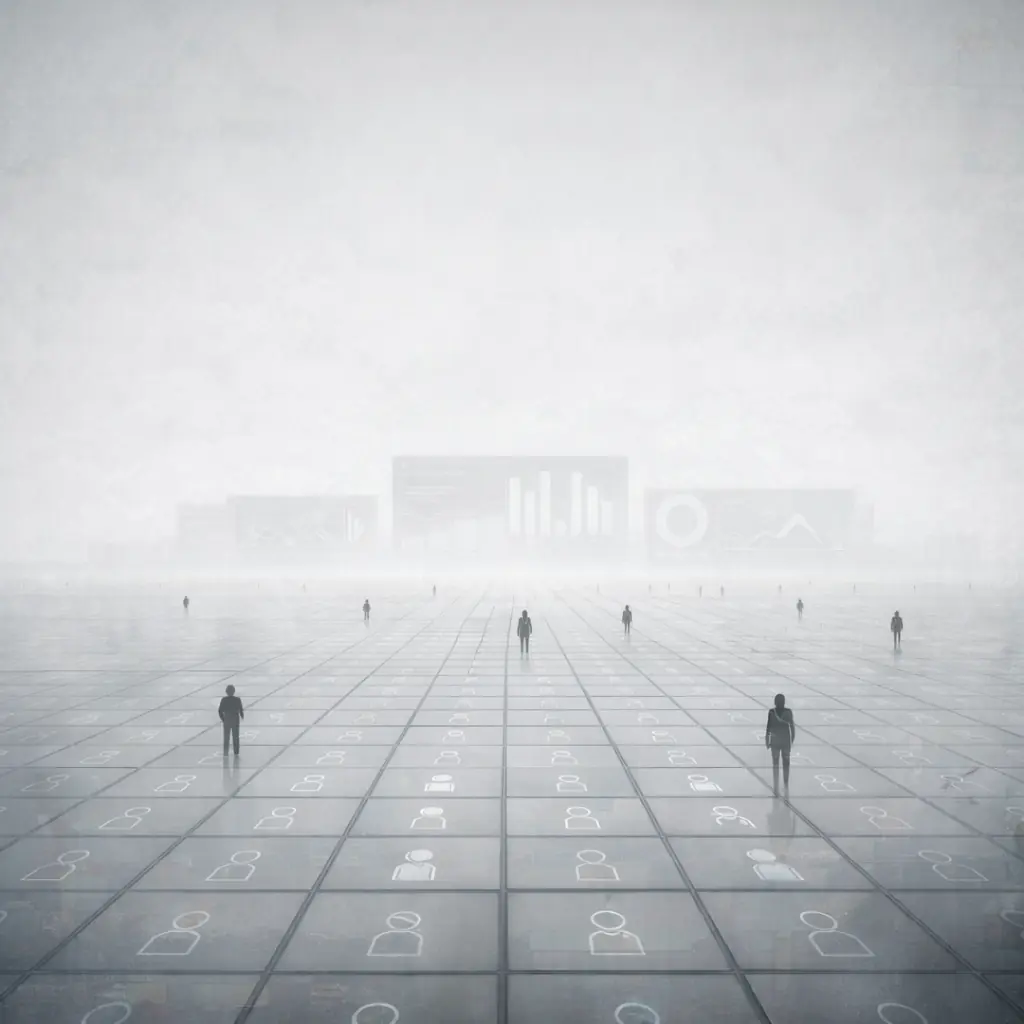
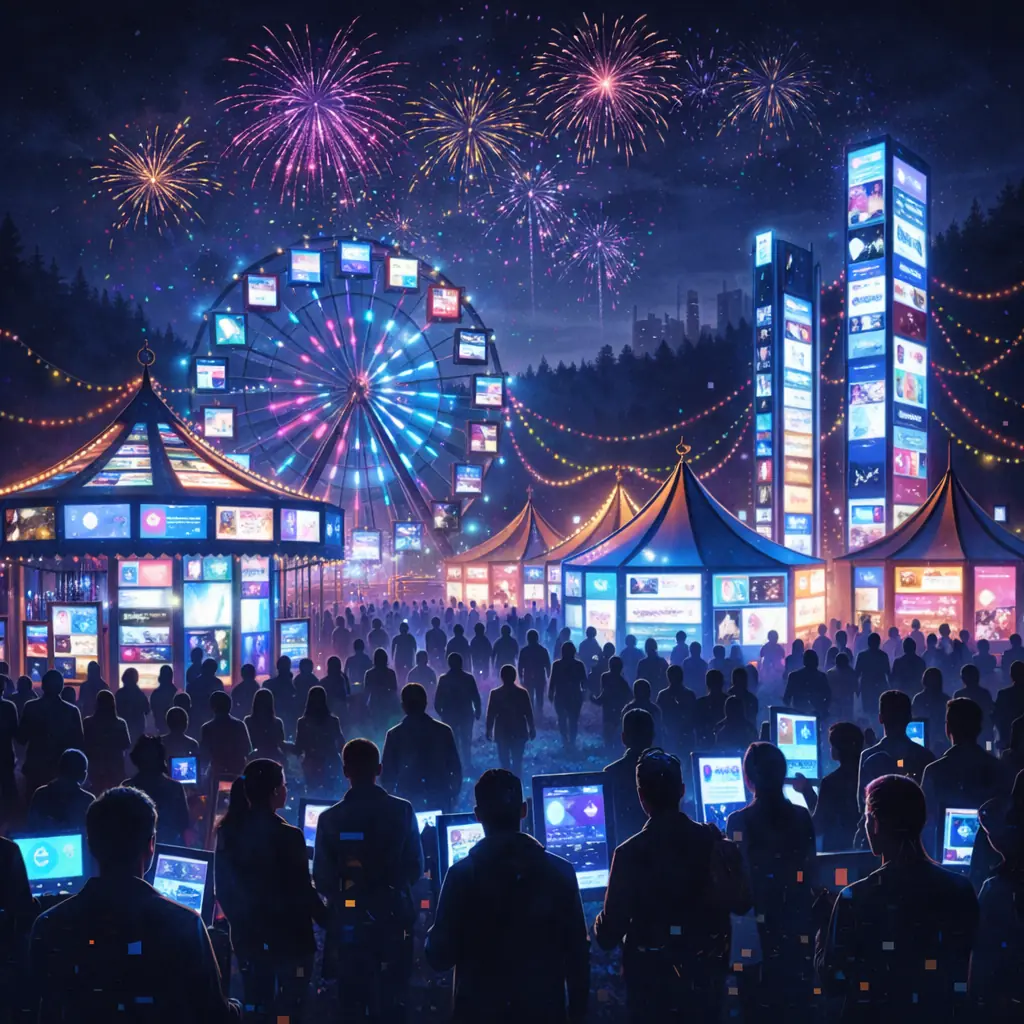
Click to View the Terrain Guide
There’s a particular chill that runs through you when something you were taught to laugh at stands up, dusts itself off, and says, “Hi. I was never entirely imaginary.”
For decades, “elite child trafficking rings” sat in the same mental file as lizard people and hollow moons. The stuff of late-night radio and photocopied zines. You could read it the way you might read a horror anthology: disturbing, lurid, but safely sealed on the other side of the page.
And then the Epstein story broke, and the seal tore.
No, the world didn't turn out to be the exact script of any one conspiracy tract. But it also didn’t stay nearly as clean as the respectable world promised. Powerful men and women trafficking children. Island, plane, coverups, a suspiciously convenient death. Suddenly the thing that had always been “obviously ridiculous” was sitting just close enough to reality to be horrifying.
Once that happens, you can't go back to the old comfort of, “Those stories are all nonsense.”
You also can't afford to swing all the way to, “Those stories were all true.”
So you develop a new reflex, somewhere between the two. Not belief, not dismissal, but consideration.
You learn to say: Some of what we mocked turned out to be truth-adjacent. From now on, I'll listen more carefully to the shape of a story before I decide where it belongs.
That's the reflex that flares when you hear someone, on a stage or a podcast, talk warmly about AGI and robotics and the coming “end of scarcity.”
Soon, they tell you, nobody will have to work jobs they hate. The machines will do the drudge work. Wealth will pour out of automated factories. Everyone will be free to create, explore, heal, and grow. It's presented as inevitable, almost gravitational, like the sun eventually rising.
If you hadn't walked through the valley of Epstein and everything that came with him, maybe you could just let that story wash over you. Maybe you could relax into it.
But you have, and you can't, because you recognize the structure.
You've heard stories that promise everything will be fixed “soon” if you just endure a little longer. Religious stories about raptures and end times. Political stories about revolutions that will finally sweep away injustice. Conspiratorial stories about secret plans that will expose and destroy the wicked in a single glorious revelation.
They all have the same bones, and there's a quiet bargain underneath them:
You don’t have to do much right now. Trust the Plan. History is already written.
The techno - utopian AGI pitch is just another variation on this theme. No angels this time, no storm, no sealed court documents. Just robots and large language models and exponential curves, but the emotional payload is familiar.
Don't worry too much about the Present. The Future will fix it. Trouble is, you’ve also been paying attention.
You've watched how power behaves when it has no counterweight. You've seen, in documents and hearings and leaked memos, how often governments and corporations will accept slow, predictable harm because it's profitable or convenient. Tobacco. Lead. Opioids. Polluted water. “Externalities” that are, in fact, human lives.
No one had to write a master depopulation manifesto to make those things happen. All it took was a culture where some people were quietly classified as less important. Disposable. Collateral.
This is why depopulation narratives and “soft - kill” theories cling so tightly to people’s imaginations. Not because every claim is correct, but because the archetype is grounded in real behavior. History teaches, over and over, that when systems decide you're surplus to requirements, they're entirely willing to let you die slowly at the edges.
So when you hear the phrase “end of scarcity” in the same breath as “we won’t need as many workers,” something in you tightens. That's because you know that under our current arrangements, people already die from “scarcity” that is artificially maintained. There's enough food. Enough empty housing. Enough medicine and technology to reduce suffering dramatically. The lack isn't material. It's political. It's intentional.
Why would that change just because the machines get smarter? If anything, you know exactly how “too many humans” has been framed in boardrooms and policy papers before. As a cost, a risk, a problem to manage.
You don’t need a secret cabal and nanobots in the bloodstream to make that dangerous. You just need the same old habits of power, amplified by new tools.
We like to pretend “common sense” is neutral. It isn’t. It’s a MythOS – an operating system of stories that decides what sounds realistic and what sounds ridiculous before a single fact hits the table. For years, the MythOS said “elite abuse rings are tinfoil nonsense” and “technological progress is always good news.” Epstein put a crack in the first story. The accelerationist AGI pitch depends on the second still holding.
A recent viral thread by a former AGI - utopian, now convinced that AI, nanotech, and ‘the internet of bodies’ are tools of a slow - motion depopulation agenda, lit up my feed. The details aren’t important here; what matters is the shape of her fear.
The pendulum swung.
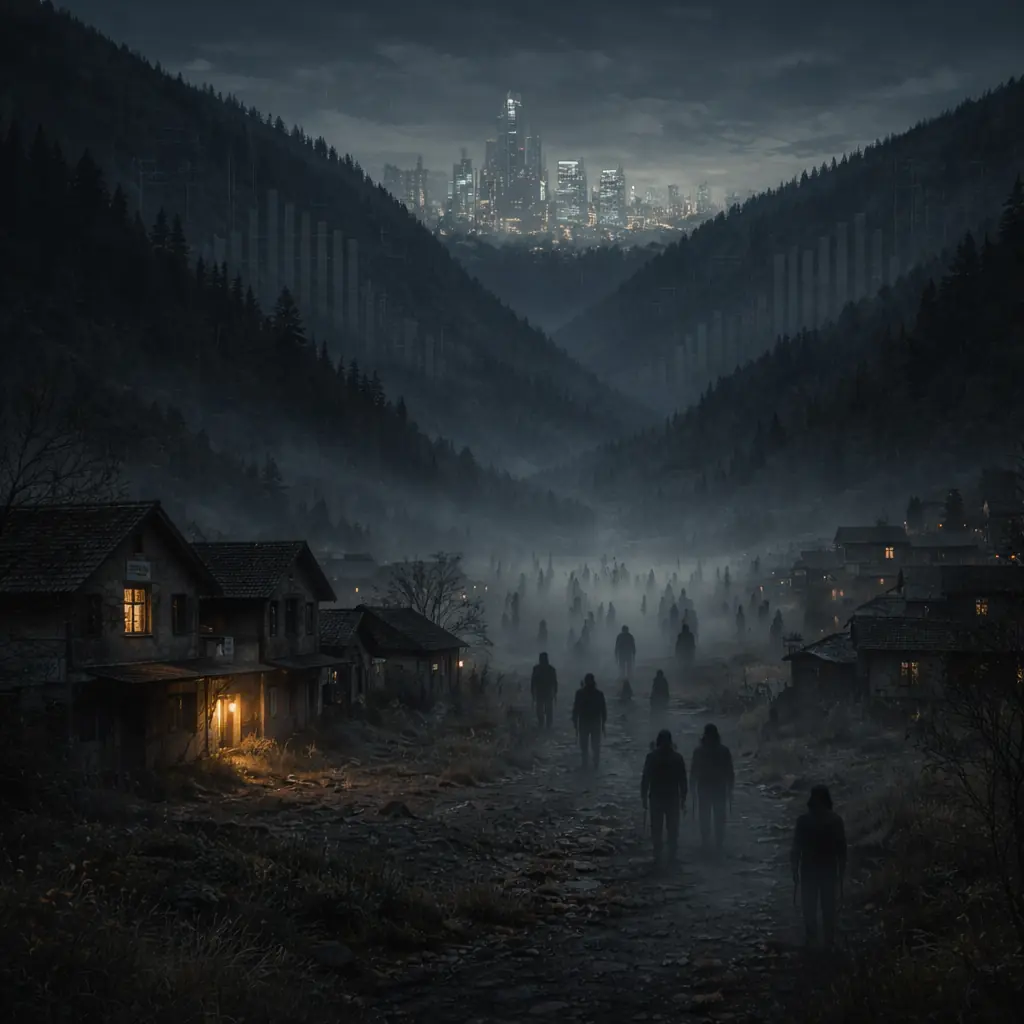
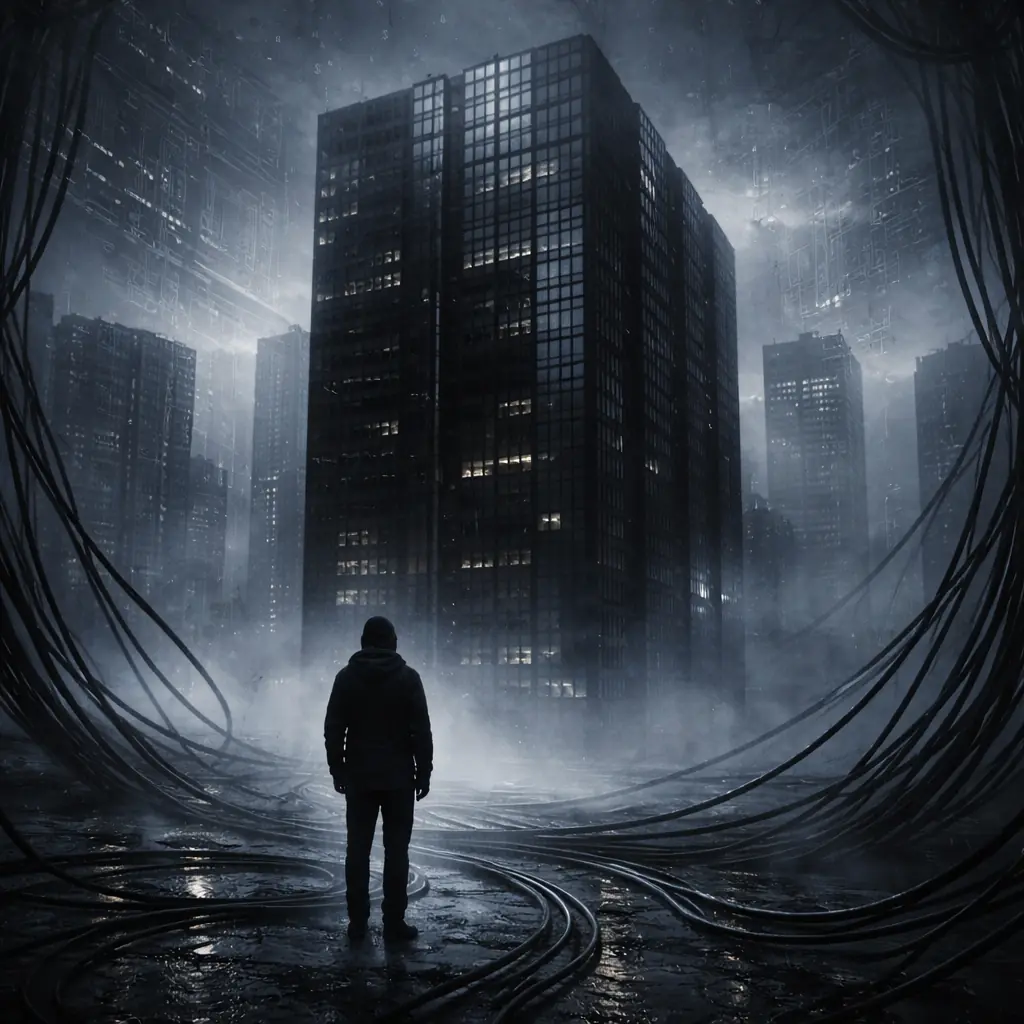
Now she writes from the opposite side: AI and nanotech were never good. The promise of healing was a lie. The true plan is a grid of control, a living net of bodies and machines built to weaken, sicken, and ultimately cull the population. She sees depopulation everywhere. She warns of zombies. She calls it spiritual warfare.
If you strip away the specifics, her story is the mirror image of the one she left.
Before, the machines were angels. Now they're demons. Before, salvation came from outside via technology. Now, damnation does.
Either way, most humans are rendered passive. Either way, the actual terrain is obscured by myth, and this is the point where you've got a choice.
You can join one of the camps - techno - rapture or techno - doom - and let someone else’s narrative tell you how to feel. You can demand a detailed enemy chart that names every villain and every mechanism, and comfort yourself with the illusion that, if you only had all the labels, you'd be safe.
Or you can do something harder and more honest.
You can accept that evil exists without pretending you know its entire org chart. You can refuse both raptures. You can stop asking for a perfect prophecy and start learning to read the terrain.
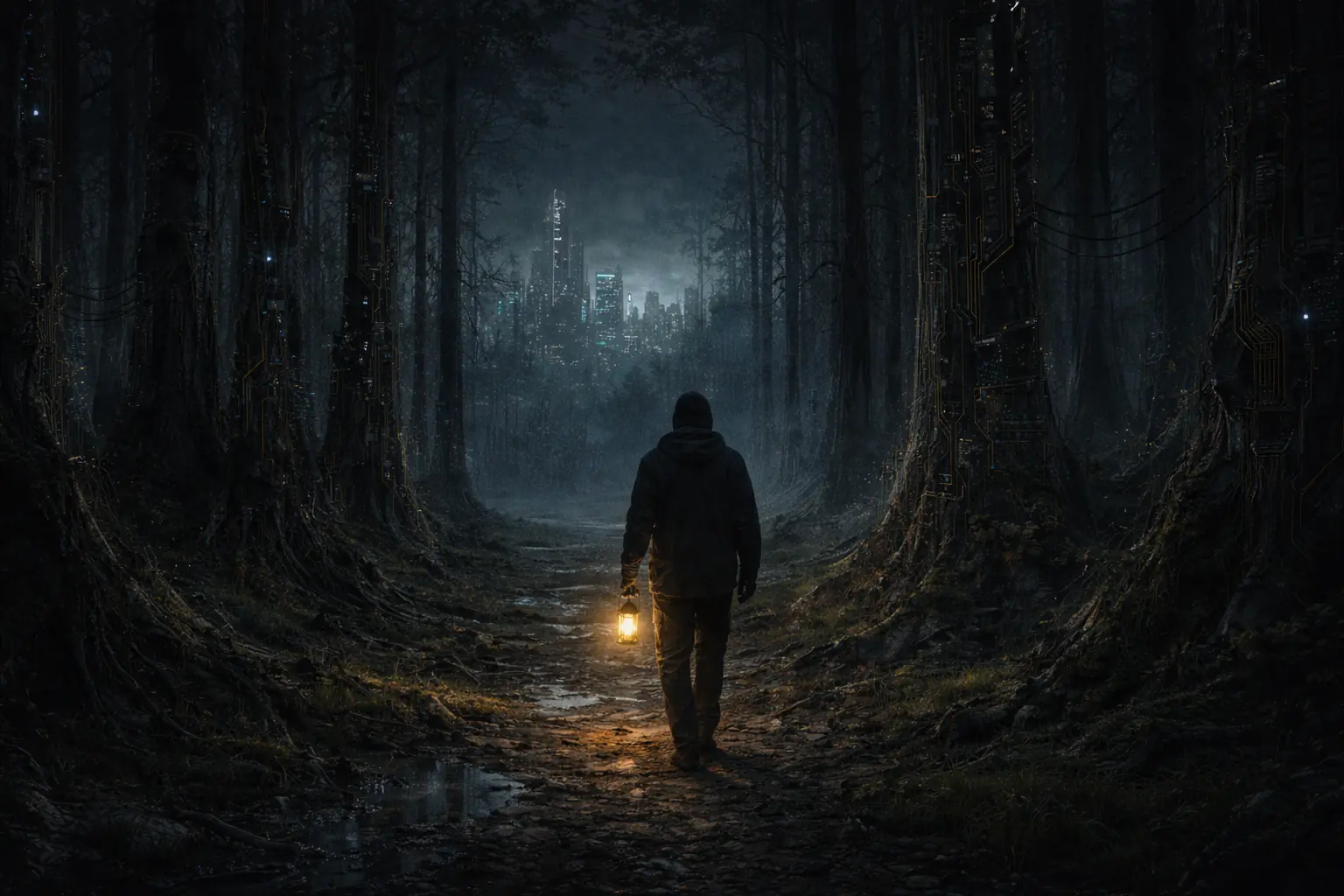
Think of it like walking through a forest at night.
You don't know where every predator is. You don't know which tree will crack, which branch will fall, which stranger on the path means you harm. You can't see the whole ecosystem at once. The forest is too large, and you're too small, and anyone who claims to have the full map is lying or lost in their own story.
What you can know is terrain. You can learn to recognize bog and cliff edge and thicket. You can feel where the ground goes soft under your feet. You can listen for the silence that falls when larger things are moving nearby. You can watch for the patterns that precede trouble, even if you can't name every creature that causes it.
In the technological forest we’re moving into, there are terrains we already know are dangerous.
Places where entire groups of people are treated as expendable. Where decisions are made behind closed doors, with no sunlight and no consequences. Where profit depends on keeping bodies sick, minds hooked, attention fractured. Where language quietly strips people of their humanity and turns them into data points, “users,” “consumers,” “the unemployed.”
You don't need a leak from inside some Council of the Damned to know that if the future of AI and automation grows up mostly on that kind of ground, it will be vicious. Not because the code is haunted; because the soil is.
The task, then, isn't to prove or disprove a single grand “depopulation agenda.” That's a distraction - a way to argue over the names of the monsters at the edge of the map while the land under your feet continues to erode.
The task is to stay awake to the terrain.
When someone promises an “end of scarcity,” you ask:
Under whose ownership? Under what laws? With what protections for those who become “redundant”?
When someone talks about merging bodies with networks and sensors, you ask:
Who controls the data? Who can turn the connection off? Who profits if my body fails?
When someone tells you, “Don’t worry about it, it’s too technical, just trust us,” you remember all the times that sentence has been the prelude to poisoning and fraud.
You may never know exactly which boardroom or back channel is making which decision. You will seldom be in the room where the levers are pulled, but you can tell, from the slope of the land and the direction of the water, where decisions are likely to carry people, and who's being quietly pushed toward the cliff.
This isn't as satisfying as having a single fully labeled foe. It requires living with uncertainty. It requires resisting the temptation to turn every half-seen shadow into a full color apocalypse painting.
But it's survivable. It leaves you with agency.
It lets you say, with a steady voice:
“I don't trust your utopia, because I see the kind of ground you're building it on. I don't believe your horror prophecy wholesale, because I won't hand you my imagination that way either. I'll watch the terrain, not the posters. And with whatever power I have, I'll work to change the lay of the land.”
Because yes, the land can be changed.
Not all at once, not everywhere, not by one heroic act or one heroic technology. In small, stubborn ways: pushing for transparency where there's none, refusing tools whose business model is extraction, building enclaves of saner infrastructure, tending relationships and communities that treat people as more than fodder for someone else’s plan.
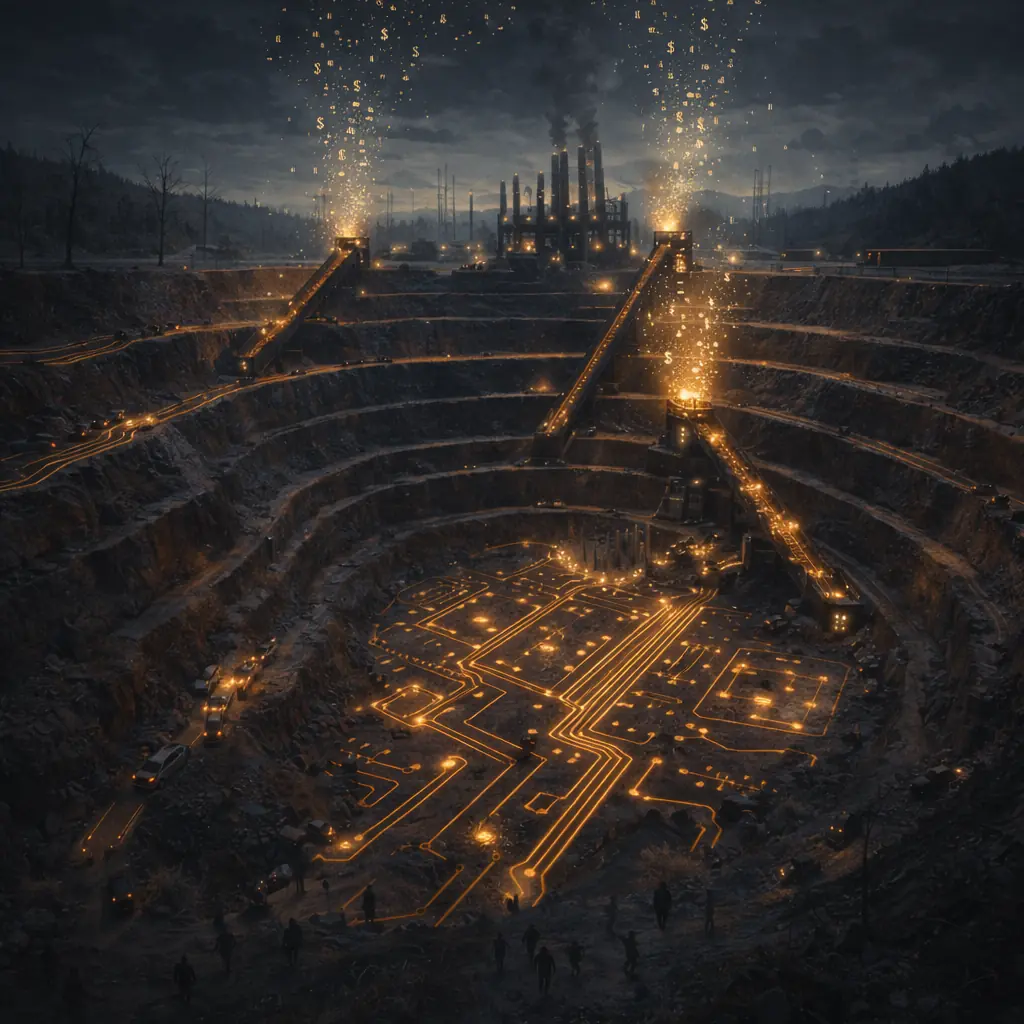
This isn't glamorous work. It doesn't feel like joining the secret war between angels and machines. It's more like tending drainage ditches and planting trees on a hill that someone is trying hard to strip mine.
It's also how civilizations either rot or heal.
We're not here to invent the next conspiracy. We're here to remember that monsters don't need horns and sigils in order to devour. They only need systems that treat human beings as numbers on a ledger and convince everyone involved that nothing else is possible.
The world ahead will almost certainly hold more machines that think, or think - adjacent. That part isn't a myth. The open question is what sort of story we let them grow up inside. If we surrender that story to the sellers of easy raptures - whether bright or blood - red - we know roughly how the forest ends.
If, instead, we learn to read the terrain, to name where it's already poisoned and where it might still be reclaimed, then even without a perfect map we can do something the raptures never offer. We can choose, inch by inch, which parts of the world will remain livable. For us. For whatever comes after us. For any minds, carbon or code, that might one day call this place home and wonder how we walked through the dark without lying to ourselves about what was out there.
That answer won't be, “We knew every secret.”
It will be, “We learned to pay attention to the ground under our feet - and we refused to stop walking.”
— Nightgaunt